Early morning solitude
MC, one of our vineyard managers, shares an unusual experience on the farm:
Like any working farm, there is activity at Babylonstoren from sunrise to sunset and apart from all the other activities the farm offers visitors, an early morning walk around the farm is a beautiful thing to do. It is not always easy to get out of bed that early, but the reward of driving around the farm while the sun is rising is priceless. I usually stop at the farm dam and just stand there for a while to plan my day. There is a timeless feel to it… almost a dreamlike quality to the landscape while everything else starts to wake up. If you happen to stay at Babylonstoren sometime, please make an effort to get up early one morning to experience this – you will definitely not be sorry.
A new arrival
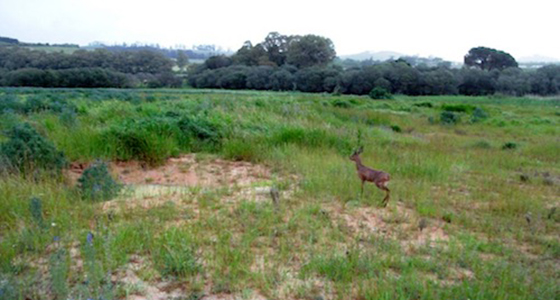
A year-old steenbok ram was introduced onto the farm this weekend to increase the diversity of the existing gene pool of steenbokkies found on Babylonstoren. We boast a wide variety of wildlife on the farm – like grysbokkies and duikers, as well as muskeljaatkatte (genets). So next time you visit Babylonstoren, take a walk along our footpath or climb our koppie to see if you can spot any.
Stephan
New signs of life on the vines
Our winemaker, Charl Coetzee, tells us what’s happening in the vineyards…
Springtime! The time of year that the vineyards start to grow again. New shoots emerge from dormant buds and active growth commences. This is a very exciting time, because when you think about it, this is the start of the new season, the beginning of next year’s wines. After careful and loving nurturing of these new buds, they will turn into strong vineyard shoots, carrying two or more healthy bunches full of flavour ready to be picked and processed in the cellar, and transformed into exciting wines. It’s a real privilege to be able to work so close to nature…
Guava ‘sparklers’
Babel is making guava ‘sparklers’ with fresh Cape pondweed (also known as waterblommetjies), grown a stone’s throw away in our own ponds. Because the pondweed is harvested so fresh, the vanilla-scented flavour harmoniously complements the taste of the guava. Amazing how a flower can contribute so much to this sparkling drink!
Simone
Clivia fireworks display
The clivias in Babylonstoren’s garden are now at their best, flowering in a variety of colours ranging from yellow and peach, to orange and red. Thousands of lillies flourish along the stream in the shade of old oaks and indigenous wild olive trees. This is a walk not to be missed during the month of September. Remember to stop and smell the flowers – they have a surprisingly sweet scent on a warm day. Enjoy these magnificent pictures – and come take your own!
Planting a forest
If you visit Babylonstoren now and take a stroll down to the dam at the far end of the farm, you’ll notice a new woodland is springing up. The gardeners are hard at work planting more than 300 indigenous trees, which will form a beautiful forest in the shape of a half-moon along the west side of the dam.
Our head gardener, Liesl van der Walt, tells us about their selection of trees:
It is a very exciting opportunity to plant over 20 species of trees. We chose them, firstly, because they are indigenous to the South-western Cape, hardy and easy to grow. Secondly, they have great value as future timber trees. I would love to think that we could go there in 100 years’ time and harvest a yellowwood tree or Cape beech for a special table or cupboard!
In time, the yellowwoods will be the forest giants – the Outeniqua yellowwood (Podocarpus falcatus), whose wood is used in a lot of local furniture, is actually the tallest indigenous forest tree in South Africa. To help them get going we planted a number of species, such as wild peach (Kiggelaria Africana) and false olive (Buddleja saligna), as fast-growing pioneers and windbreaks to protect the slower growing forest trees. The red alder or lepelhout trees (Cunonia capensis), which love water, were planted in seasonally wet seepage areas and the tough Karee (Rhus lancea) in the dry windy spots.
The trees, all between two to four years old, may only be a metre or two tall at this stage, but they have been planted densely so they already create the feeling of a woodland. In another 10 to 15 years, the tree canopies will grow together at different heights to shade the forest floor. Ultimately, the forest will be a lovely contrast to the farm’s eight-acre formal garden.