VISI, February 2012

 Refresment station, an astonishing glass conservatory that doubles up as a teahouse…

Read full article here

Comment

Meet Sugar Baby

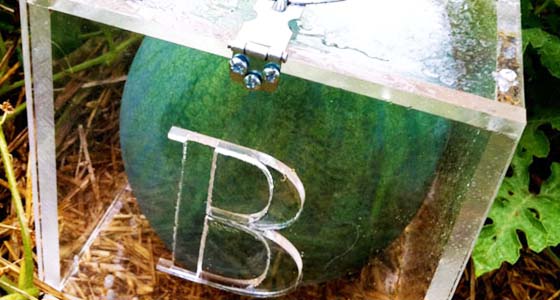
Remember the watermelon experiment we blogged about in January? Well, our experiment has borne fruit! Meet Sugar Baby – the watermelon we planted on 15 October 2011, and picked on Monday.

In between the planting and the picking, we placed Sugar Baby in a Perspex box with a “B” debossed on the inside, and then on Monday, when we saw Sugar Baby starting to break through the box, we knew it was time to harvest. We love our square watermelon!

Comment

Carrot Flowers

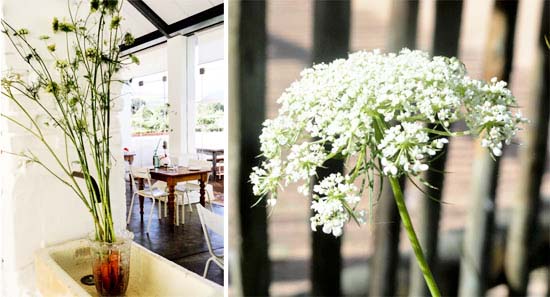
Many of the patrons visiting Babel Restaurant have been wondering about the white lace-like flowers we have on display, and can hardly believe it when we tell them they are carrot flowers!

The benefit of leaving our carrots to flower is that we can now harvest the flower heads for seeds, and sow them again. After all, the good old carrot is one of our main vegetables at Babylonstoren – we use it in our juices, salads… and flower arrangements too. We usually plant Chantenay Karoo and like to hedge it in with other ‘light feeders’ which don’t need a lot of compost, such as spring onions.

Comment

Captive pears

Readers of this blog may remember this post about the process we started a while back: Whilst the pears on our trees were still very small, we placed them inside bottles, leaving them to grow there.

Well, things have moved along, and this Tuesday we harvested the pears – now grown full size inside the bottles – and we started the process of creating pear brandy.

We started by cleaning the bottles on the inside with a sterile solution, after which we filled them up with one of three alcohol solutions, namely:  clean Vodka, pear distillate, and plum distillate sweetened with fructose.

We’re letting the pears stand for a while before we sample the results, and once we’ve decided which combination works best, our pear brandy will be available for sale in the farm shop.


Comment

Garden Design, March 2012

  African Oasis- Near Cape Town, a farmstead hotel restores gardens and spirits….

  Read Full Article Here

Comment

Emptying the tank

Today, we emptied our red wine tank, and as you can see, we really got stuck in!

While hard at work, our head winemaker, Charl Coetzee, put together this photo story to let you in on the behind-the-scenes process of red wine making.

With red wine, the fermentation happens on the skins of the grapes. As soon as fermentation starts, the skins form a cake which rises to the top, leaving all the juice underneath.

So when we want to empty the tank, we subtract all the juice at the bottom of the tank, pumping it away, leaving the skin cake to settle on the bottom of the now-empty tank.

We then open the tank to make sure that all the juice has been pumped away and that only the skins are left over. We would also dig out some of the skins into the basket of the basket press to make emptying the tank a bit easier.

The basket is then transported to the basket press where the rest of the juice – which is, of course, our newly fermented red wine – is pressed out of the skins.

Of course, when making wine, we have to taste all the time to make sure that everything is fine with the newly-fermented wine. It's part of the job you'll seldom hear complaints about!


PS: Just to let you know, the wine in this tank is a Malbec and is not about to be bottled. It will only be available for use in one year, as it is part of a future Bordeaux blend. We’re sure it’ll be worth the wait!

Comment

Tatler’s Best Hotels

We’re thrilled to bits to have been included in Tatler magazine’s selection of Best Hotels for 2012, selected for our ‘Food, Glorious Food”!  Click here for the full article.

Comment

Pick a fig, any fig

If you love figs, this is the time to visit the Babylonstoren garden, as we’ve got figs… well… we’ve got figs growing on trees!  And right now, the fragrance of fig in the air is quite irresistable.

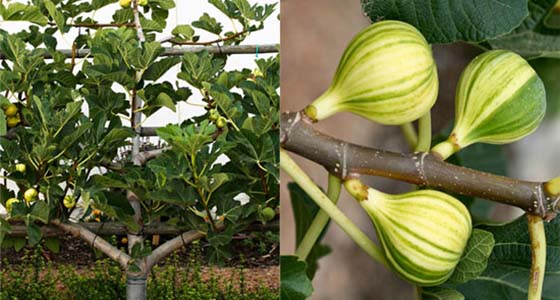
Our trees are between 3-4 years old, with their first crop ripening, fig by fig over the next few weeks. Probably the most striking of the trees is the striped yellow and green Tiger  Fig (below).

We have thirteen fig varieties growing in our garden, namely: Tiger figs, Greta, Brown Turkey, Caromb, White Genoa, Kadota, Cape White, Black  Mission, Adams, Diana, Smyrna, Marseille and Imperial.  Some fruits are  yellow or green,  others black or brown, as you can see in these images:

L-R: Tiger Fig, Gretha Fig, Caromb Fig, Kadota Fig, Smyrna Fig

And when you can’t resist tempation any longer, give a soft, ripe fig a gentle pull and the  skin will easily peel away at the stem, breaking of in your hand ready for eating.

1 Comment

Good weather for owl watching

It’s a full moon with clear skies tonight, which makes it perfect weather for owl watching. I you’re lucky, you’ll get some great photographs too, like this evocative sequence of one of the Babylonstoren owls taking off.

Click here to read more about our owls, and to hear what they sound like too.

Comment

Our table grapes

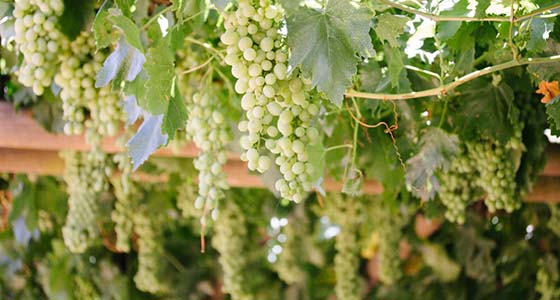
We’re enjoying monitoring the progress of our table grapes on the farm, where we have 18 different varieties, planted  in a pattern of ripening, from the earliest ripening (eg: Prime Seedless), to the latest ripening variety. Right now, the grape bunches are hanging heavily on from the trellis, awaiting another 2-3 weeks of ripening.

Most of these grapes are Vitis vinifera, with the exception of our Catawba grape, which is fairly unusual in South Africa, and can have a pronounced musky or “foxy” flavour. Catawba is a Vitis labrusca grape,  better known as the wild Vitis variety, which is used for wine as well as juice, jams and jellies.


Comment

Owl Spotting

As is the case at any farm, we have to deal with gerbil and mouse populations, and of course, we’d like as natural a solution as possible. That’s why we turned to owl expert, Lianda Naudé of the Skova Owl Research Project to help us increase our owl population here on the farm.

Lianda spent a day and evening with us, pointing out existing signs of owl activity, identifying the local species and sharing ideas for how to encourage owls to hunt and breed here.

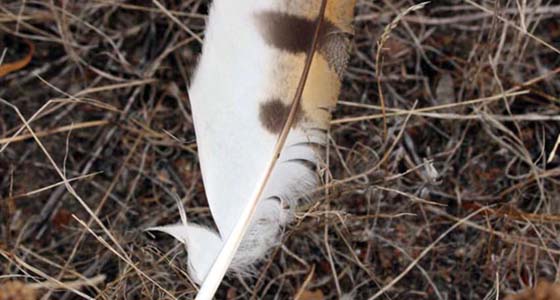
The first signs of owls we found were droppings that look like white paint splatters on the edge of the fish pond, against the gable of the historical wine cellar in the Werf and in the vineyard too. Also, just below a recently-placed Barn Owl box, we found owl feathers, as well as regurgitated pellets of fur and bones. Looking more closely at these pellets, we could see the remains of gerbils, which seemed promising.

Visiting the same owl box after sunset, we were lucky to see the Barn Owl flying out of the nest, and later in the evening we heard the thin screeching call of the Barn Owl, as well as the familiar hooting of the Spotted Eagle Owl (click the links to hear audio clips of these two birds’ calls)

Barn Owls are expert rodent killers and can breed up to four times a year with two to five eggs in a clutch. To encourage the young offspring of the existing owls to stay, we plan to place a few more Barn Owl boxes in strategic places at least 500m apart. We’ll also erect a few raptor perches, which are poles about six meters high from where raptors can get a good view for hunting.

So all you mice and gerbils at the farm had better watch out! The owls are coming to Babylonstoren.


2 Comments